
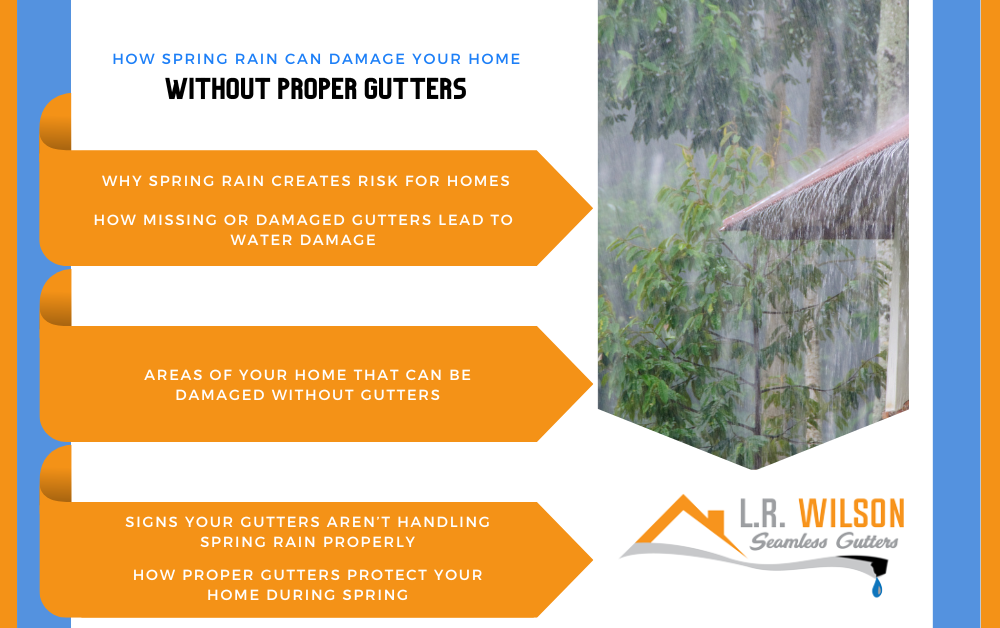
Spring often brings steady rain, melting snow, and saturated soil. While the warmer weather is welcome after winter, the increased rainfall can quickly create problems for homeowners who are not prepared. One of the most overlooked defenses against seasonal water damage is a properly functioning gutter system.
Gutters play an important role in directing rainwater away from your roof, siding, and foundation. When gutters are missing, clogged, or damaged, water has nowhere to go. Instead, it can spill over roof edges, pool near your home’s foundation, and slowly cause damage that becomes expensive to repair. Understanding how spring rain impacts your home without proper gutters can help you prevent these issues before they start.
Why Spring Rain Creates Extra Risk for Homes
Spring storms often bring heavier and more frequent rainfall than many other times of the year. After months of winter weather, the ground is already saturated from melting snow and ice. When additional rain falls, the soil around your home may struggle to absorb the extra water, increasing the risk of runoff collecting near your foundation.
This is where properly functioning gutters become essential. Gutters are designed to collect rainwater from your roof and guide it safely away from your home. During the spring, they help manage the larger volume of water created by frequent storms. Without effective gutters in place, rainwater can spill directly off the roof and concentrate around your home’s exterior, increasing the chances of structural and moisture-related damage.
How Missing or Damaged Gutters Lead to Water Damage
When rain falls on your roof, it needs a clear path to drain safely away from your home. Gutters are designed to collect that water and move it through downspouts so it can drain away from the structure. Without a working gutter system, rainwater simply runs off the edges of the roof and falls directly around the base of your home.
Over time, this uncontrolled water flow can cause a variety of problems. Water may pool near the foundation, seep into small cracks, or wash away soil that supports the structure. Even during a single heavy spring storm, large amounts of water can accumulate around the home if gutters are missing, clogged, or damaged.
Properly installed and maintained gutters help control where rainwater goes. Instead of allowing water to collect in vulnerable areas, they guide it away from your roofline, siding, and foundation, helping prevent long-term structural damage.
Areas of Your Home That Can Be Damaged Without Gutters
Without properly functioning gutters, rainwater can impact several parts of your home. Instead of being directed safely away from the structure, water falls directly from the roof and collects in areas that were never designed to handle that amount of moisture. Over time, this repeated exposure can lead to costly repairs.
Foundation Problems
One of the most serious risks occurs around your home’s foundation. When rainwater consistently falls near the base of the house, the soil becomes oversaturated. This can cause pressure against foundation walls and allow water to seep into small cracks.
Over time, this may lead to foundation shifting, cracks in walls, or moisture problems inside basements and crawl spaces.
Roof and Fascia Damage
Water that runs off the roof without proper gutters can also damage the roofline. Constant exposure to moisture can cause fascia boards and trim to rot. As these materials weaken, they may eventually require replacement and could even affect the stability of the gutter system itself.
Basement Moisture and Flooding
Homes without effective gutters are also more likely to experience basement moisture issues. When water pools around the foundation, it can slowly seep through concrete or masonry walls. Even small amounts of water entering a basement can create humidity problems, mold growth, and damage to stored items.
Landscape and Soil Erosion
Rainwater falling directly from the roof can also damage the surrounding landscape. Over time, the force of the water can wash away mulch, soil, and decorative landscaping. This erosion may create trenches around the home and make it harder for plants and grass to grow properly.
Signs Your Gutters Aren’t Handling Spring Rain Properly
Spring storms can quickly reveal problems with your gutters. If they are clogged, damaged, or not draining correctly, you may start to notice warning signs around your home. Catching these issues early can help prevent more serious water damage.
Some common signs your gutters may not be working properly include:
- Water spilling over the sides of the gutters during rain
- Gutters pulling away from the roofline
- Visible cracks, holes, or rust spots in the gutter system
- Water pooling near the base of your home
- Soil erosion or washed-out landscaping beneath the roof edge
- Water stains or streaks on siding
If you notice any of these problems during spring rainstorms, it may be time to clean, repair, or replace your gutters to ensure they are directing water away from your home properly.
How Proper Gutters Protect Your Home During Spring
A well-designed gutter system plays a key role in protecting your home from the effects of heavy spring rain. Gutters collect rainwater as it flows off the roof and guide it through downspouts so it can drain safely away from the house. This controlled drainage helps prevent water from collecting in areas where it could cause damage.
When gutters are functioning properly, they help reduce pressure on your home’s foundation, protect roof edges and fascia boards, and keep water from washing away soil around the property. They also help maintain the condition of siding, landscaping, and walkways by preventing excessive runoff.
Keeping gutters clean and properly maintained ensures they can handle the increased rainfall that often comes with spring storms. Regular inspections, cleaning debris from the system, and repairing any damage can go a long way in protecting your home from costly water-related problems.
Protect Your Home With Reliable Gutters
Spring rain can put a lot of stress on a home, especially when water is not being properly directed away from the structure. Without working gutters, rainwater can damage foundations, siding, landscaping, and even interior spaces like basements. Taking the time to inspect and maintain your gutter system can prevent many of these costly problems before they start.
If your gutters are clogged, damaged, or no longer working as they should, it may be time for professional service. The team at L.R. Wilson Seamless Gutters can help ensure your home is ready to handle spring storms with a reliable gutter system designed to protect your property.